

If you’ve ever wondered what solitaire really is, how it works, or why millions love it, this in-depth guide breaks it all down in the clearest and most engaging way.
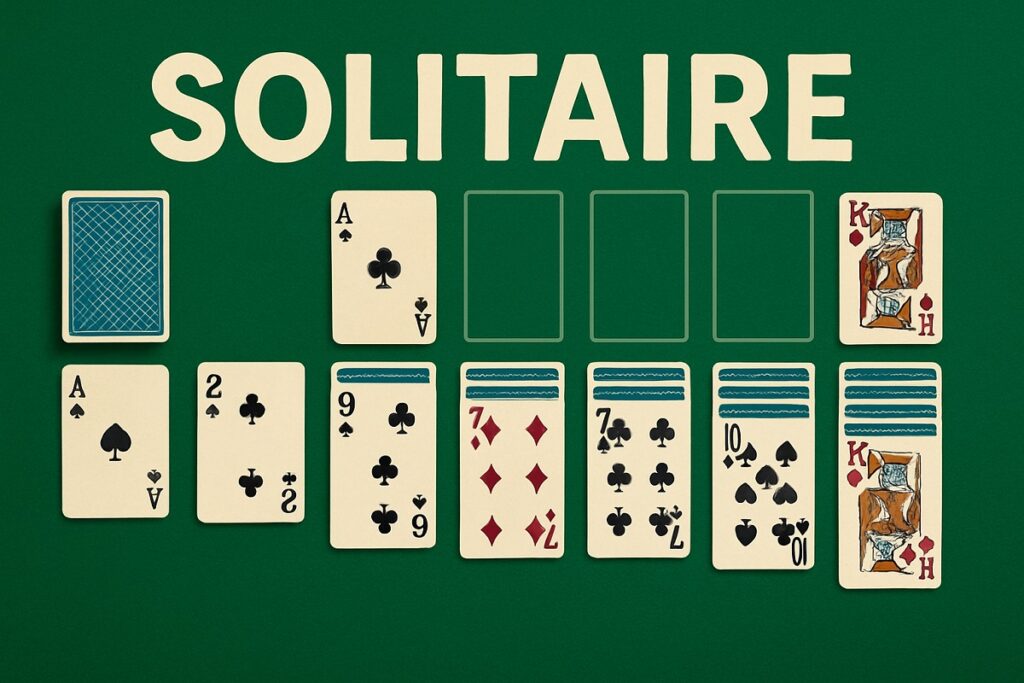
Table of Contents
Understanding the True Charm of Solitaire
When people mention solitaire, most of us picture a calm moment, a simple card layout, and that quiet satisfaction that comes from moving cards into neat piles. Yet, if you’re like many beginners, the rules may seem a little mysterious at first. Honestly, I remember the first time I opened a digital card game on an old computer—half curious, half confused—and thinking, “Alright… what exactly am I supposed to do here?”
In reality, solitaire is far less intimidating than it seems. It’s one of the most universal single-player games in the world, and whether you choose to play with a real deck of cards or enjoy online solitaire, the logic behind the game is beautifully simple once someone explains it properly. That görev is basically what this guide is about.
So, What Exactly Is Solitaire?
Solitaire—sometimes called patience—is a card game you play alone. Maybe that’s part of the magic: you’re not competing against anyone but yourself. The most common variation is classic solitaire, also known as Klondike. This is likely the one you’ve seen on computers, phones, or those tiny digital games people used before smartphones existed.
The aim is straightforward: sort all the cards into four foundation piles, each pile representing a suit, in ascending order from Ace to King. Easy, right? At least in theory. Where solitaire gets interesting (and occasionally a little stubborn) is the process of reaching that goal.
Why Solitaire Became a Global Favorite
If you think about it, it’s rare for a game to stay popular for centuries. But solitaire has that timeless quality. There’s a meditative rhythm to it, a nice combination of chance and strategy. And I guess that’s why so many people, including me from time to time, return to it when we want something relaxing but not mindless.
Another reason? Accessibility. You don’t need a partner, you don’t need much space, and nowadays, you certainly don’t need a physical deck. With the rise of free solitaire platforms and apps, you can open a game whenever you want, whether you’re taking a short break, decompressing after work, or avoiding doing laundry (hey, no judgment here).
The Basic Components of Classic Solitaire
Before diving into gameplay, it helps to understand the layout. Once you know what each section does, the rest becomes much more intuitive.
1. The Tableau
This is the main playing area—the seven columns of cards you manipulate the most. The first column has one card, the second has two, and so on until the seventh has seven cards. Only the top card of each column is face up at the beginning.
2. The Stock
The remaining cards that haven’t been dealt into the tableau form the stock (also called the draw pile). These are the cards you flip through as you play.
3. The Waste Pile
When you draw a card from the stock but don’t place it anywhere yet, it sits in the waste pile. Think of this as your on-deck area.
4. The Foundation Piles
These are the four final destination piles—one for each suit—where you’ll eventually build from Ace through King.
How Do You Actually Play Solitaire?
Let’s break it down in a natural, easy way. No jargon, no unnecessary complexity. You’re about to see why so many people enjoy teaching beginners how to play solitaire.
Step 1: Build Descending Sequences in the Tableau
You can move cards around the tableau to uncover hidden face-down cards. The main rule: place cards on top of each other in descending order, alternating colors. That means a red 7 can go on a black 8, and so on.
Step 2: Reveal Hidden Cards
Each time you move the top face-up card from a column and reveal a face-down card beneath it, flip that card face up. This is one of the most satisfying parts of the game. Every new card might unlock a whole chain of moves.
Step 3: Use Aces Wisely
Whenever you uncover an Ace, move it to the foundation pile immediately. You’ll eventually begin stacking the cards of that suit in order—Ace, 2, 3, 4, and so on.
Step 4: Draw from the Stock When Needed
When you hit moments where the tableau gives you no more options (it happens to all of us), draw from the stock pile. These new cards might unlock more moves.
Step 5: Build the Foundation Piles
Your ultimate aim is to move every card from the tableau and stock into these piles. Once all four piles go from Ace to King, you win. That last card sliding into place? Yeah… it’s weirdly satisfying every single time.
Why Online Solitaire Became Such a Big Trend
If you’ve played the digital version at least once—and chances are you have—you probably understand the appeal. Digital solitaire removes the hassle of shuffling (because honestly, shuffling a full deck perfectly is harder than the game itself sometimes).
But beyond convenience, online solitaire websites have introduced features like:
- Multiple solitaire variations
- Progress tracking
- Instant restarts (great for perfectionists)
- Hints and auto-moves
- No need for physical space or a table
Whenever I travel, I notice how often people pull out their phones to unwind. Solitaire fits that modern lifestyle perfectly. Quick, calm, satisfying—almost like mental brushing your teeth.
Classic Solitaire vs. Modern Variations
Klondike may be the most famous, but it’s far from the only version. Once you start playing regularly, you’ll probably get curious, just like I did.
Spider Solitaire
Uses two decks instead of one. It’s trickier, more strategic, and honestly feels like the “advanced course” of solitaire.
FreeCell
Every card is face-up from the beginning, which makes it more about planning and less about luck. Some people love that added control.
Pyramid
Pairs of cards must add up to 13. It’s quite different—but equally addictive in its own way.
TriPeaks
Fast-paced, smooth, and more focused on streaks than strict structure. Perfect for people who like dynamic gameplay.
Tips for Winning More Often
Solitaire isn’t entirely luck. In fact, once you get the hang of it, your success rate increases surprisingly fast. Here are some realistic, practical tips I’ve discovered along the way:
- Always uncover the largest hidden stacks first.
- Try not to rush Aces or low cards into foundations too early; sometimes you need them in the tableau.
- Empty tableau columns are precious—use them strategically.
- Be mindful with your stock cards; sometimes skipping a move helps later.
- Don’t move Kings unless it genuinely benefits your layout.
And genuinely, one of the best ways to improve is simply to keep playing. The more you recognize common patterns, the easier the game feels.
Why Solitaire Is Surprisingly Good for Your Mind
People often underestimate solitaire as “just a card game,” but there’s actually a bit more depth to its benefits.
It helps with:
- Strategic thinking
- Pattern recognition
- Short-term memory boosts
- Mental relaxation
- Patience and focus
For me personally, it acts like a small reset button on stressful days. Five or ten minutes of solitaire clears mental clutter in a way that’s hard to explain but easy to feel.
How to Start Playing Solitaire Today
If you’ve read this far, you’re probably either nostalgic or genuinely ready to try (or retry) the game. You can download apps, grab a deck, or—and this is what most people prefer—simply open a browser and start with a free solitaire platform.
If you want a clean, distraction-free place to play solitaire instantly, I personally recommend checking out:
https://solosolitaire.com/
Final Thoughts
Solitaire is more than a card game—it’s a little ritual of patience, logic, and quiet satisfaction. Once you understand the rules and feel the rhythm of the gameplay, you’ll see why it has lasted through generations without losing its charm.
If you have thoughts, questions, or your own funny solitaire experiences, feel free to share or discuss them. And of course, don’t hesitate to jump into a game and enjoy a moment of calm strategy whenever you need it.
What is your reaction to this?
 I liked it
 Wonderful
 Thanks
 Good
Good Hahaha !
 Incredible
 Interesting
 Wrong
Wrong
